
From blue sky to black space
From Blue to Black follows the companies, programs and people building the future of flight, one milestone at a time.
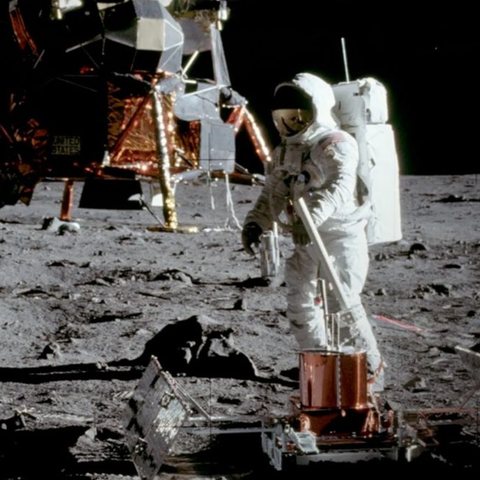
The modern space race is accelerating fast. Every week brings breakthroughs, setbacks and radical new ideas. The sooner these stories are captured, the sooner people will grasp the scale of what's unfolding.
For decades, space was a stage for a few government agencies. Today more than 70 countries run space programs, and hundreds of driven private companies are cutting costs, supporting government missions and chasing visions of their own beyond our atmosphere.
Humanity is returning to the Moon, reaching for Mars and building habitats in orbit. This site exists to keep track of it while it happens, and to put names and faces on the people doing the work.
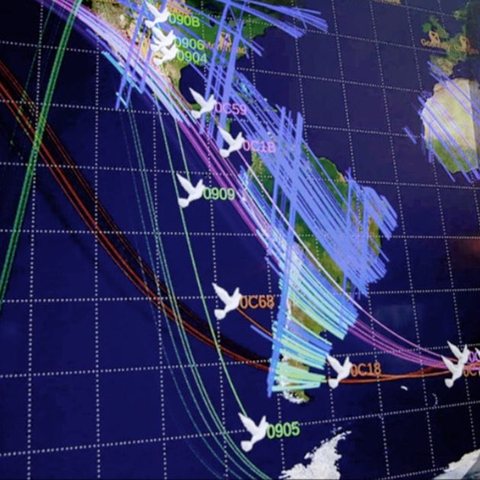
For millennia, our ancestors looked up at the sky with both feet planted firmly on the ground. Then, in 1903, a bicycle mechanic named Orville Wright flew a powered, controllable airplane for twelve seconds in front of a small crowd of stunned onlookers, and fired the starting gun on a race to go higher, faster and farther.
Thirteen years after Wright died, Yuri Gagarin orbited Earth. Eight years after that, Neil Armstrong and Buzz Aldrin walked on the Moon. Within a century of that first flight, probes had visited every planet in our solar system.
We're living through the next chapter of that story right now, and it's moving faster than any chapter before it.
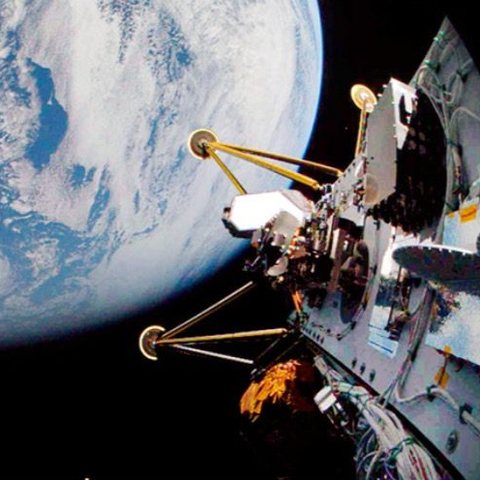
This is a worldwide map of the space industry. It began in Southern California, where so much of the industry was born and where it still builds, tests and flies, and it now reaches from Long Beach and Mojave to the Bay Area, the Space Coast and beyond. Launch companies, satellite makers, engine shops and the people who move between them all have a place here.
Every company gets a timeline, every program its milestones, and every person a page that follows their career. We keep adding companies, region by region, so the map keeps filling in.
Every Monday, a weekly report rounds up the milestones and the stories worth knowing, including an international spotlight. Subscribe to get it delivered to your email.
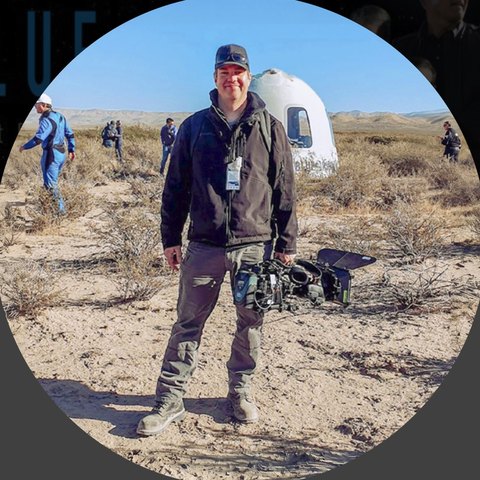
From Blue to Black was created by Kevin Curran, a Burbank-based director of photography who has spent more than 30 years behind the camera, many of them pointed at aerospace. At Blue Origin he was the closest camera to capsule recovery, and for NASA and Meta he was director of photography on coverage of Artemis.
He directed, shot and edited Beyond Blue Sky, a documentary about SpaceShipOne co-produced with the late astronaut Brian Binnie. From Blue to Black grows out of the same conviction: the people on the front lines of this era deserve to be seen, and their stories deserve to be captured before they're lost. See his work at kevinocurran.com.
Have a milestone, tip or correction? Send it in. We want to hear about it.
Interested in a partnership or sponsorship? Reach out through the same form. We read every message and reply to the email you provide. The countdown to what's next has already started.